Éilís Ní Chriocháin
Musician • Author • Keeper of the East Galway Irish Music Tradition
"You know, there's nothing wrong with those old simple tunes."
From Ireland to America, Through Decades of Searching, Back to What Was There All Along
In a small sitting room in Castlerea, beneath a crooked deer head that was never straightened, master fiddler Eddie Kelly taught me that I didn't have to work so hard to be loved.
His music sounded like honey, thick, golden, moving at its own unhurried pace. Not rushing. Not proving anything. Just being.
I spent decades searching across two continents for what I'd experienced in that quiet room. Through self-help seminars. Through Feldenkrais classes and Tony Robbins events. Through festival stages where the tempo was always faster than my heart wanted to beat.
What I was looking for had been there all along.
Draíocht: And Then The Quiet
Pre-Order the Album & Memoir
Draíocht: And Then The Quiet is coming, the album and the book. Be first to hear it, and first to read it.
What East Galway Music Sounds Like
At the Royal Casino Cinema, I heard Joe Burke play 'Bonnie Kate' on the button accordion. I was young enough that the adults around me blocked my view entirely.
It sounded like honey.
His fingers danced across the buttons, and I couldn't help myself — I had to stretch forward, had to see those buttons, those fingers. What was he doing? How was he pulling something out of the air that made me feel so completely, unexpectedly alive?
The music was sweet, but it wasn't sugary. It was substantial. Complex underneath—all those intricate notes executed with precision, nothing glossed over with speed or noise. It was pure. Each note was given its full value before moving to the next. The melody flowed thick and golden, moving at its own unhurried pace.
Something was happening to my body that I had no words for. My nervous system was syncing with Joe's. My heartbeat was slowing to match the tempo. My breathing was deepening in rhythm with the phrases.
The East Galway Irish Music tradition is often called a "listening tradition"—music meant not for dancing but for deep attention. The tempo is slower. The phrases are long and flowing. The ornamentation is subtle and musical rather than technical.
There's space in the music—rests, pauses, moments where the silence matters as much as the notes.
Today, only four fiddle players in the world play exclusively in this tradition: Liam Lewis, Breda Keville, Conor Tully, and myself.
Four people carrying a sound that once filled every kitchen in a region.
At the Royal Casino Cinema, in Castlerea, Co. Roscommon, a cinema that doubled as a concert hall, I heard Joe Burke play 'Bonnie Kate' on the button accordion. I was young enough that the adults around me blocked my view entirely.
It sounded like honey.
His fingers danced across the buttons, and I couldn't help myself, I had to stretch forward, had to see those buttons, those fingers. What was he doing? How was he pulling something out of the air that made me feel so completely, unexpectedly alive?
The music was sweet, but it wasn't sugary. Nothing was glossed over with speed. Each note was given its full value before he moved to the next, and the melody came thick and golden, in no hurry at all.
Something was happening to me that I had no words for. I only knew I didn't want him to stop.
The East Galway Irish Music tradition is often called a "listening tradition", music meant not for dancing but for deep attention. The tempo is slower. The phrases are long and flowing. The ornamentation is subtle and musical rather than technical.
There's space in the music, rests, pauses, moments where the silence matters as much as the notes.
Today, only four fiddle players in the world play exclusively in this tradition: Liam Lewis, Breda Keville, Conor Tully, and myself.
Four people carrying a sound that once filled every kitchen in a region.
Three Albums of the East Galway Tradition
Eddie Kelly taught me that music isn't about what you add—it's about what you have the courage to leave out. These albums transmit that tradition
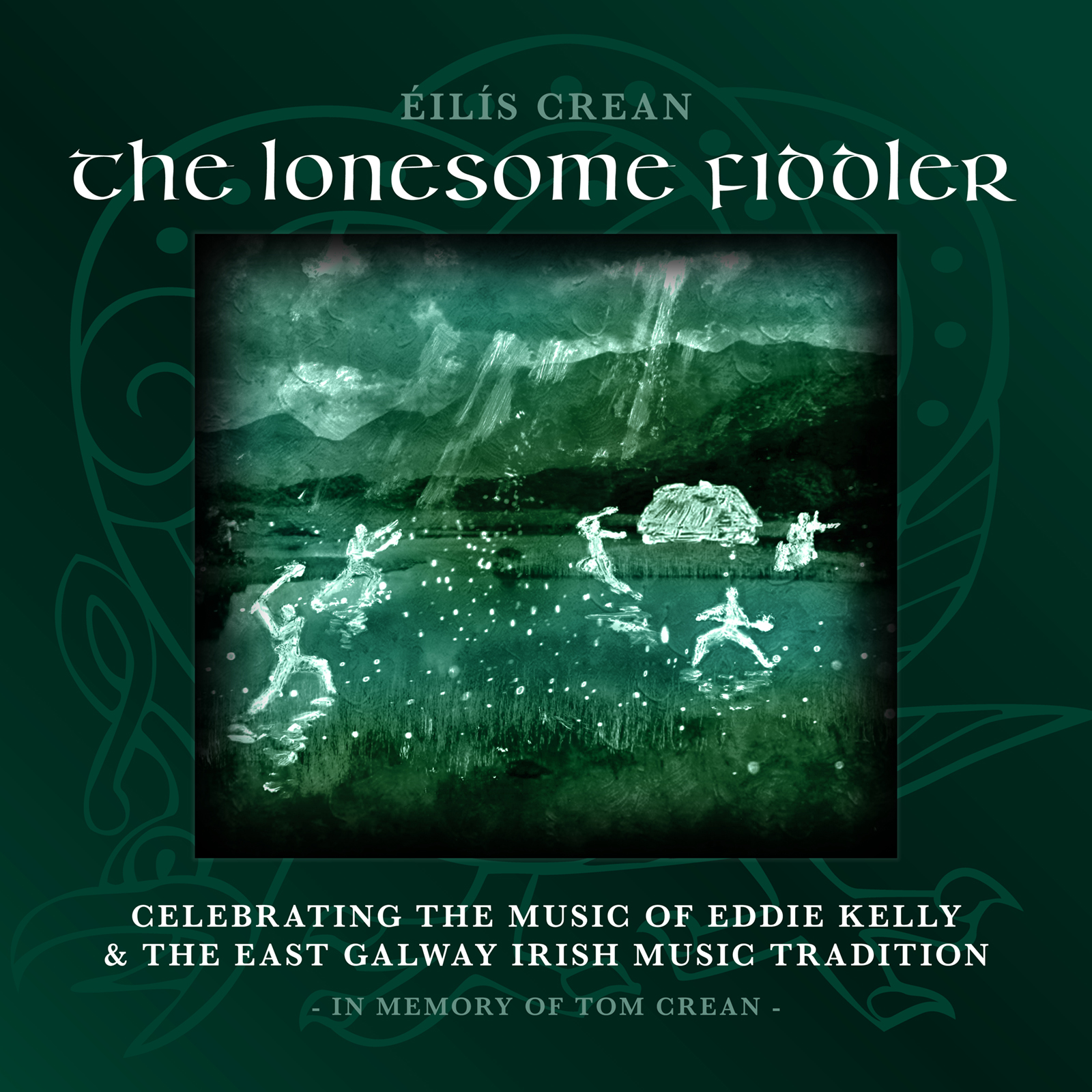
The Lonesome Fiddler (2014)
My first recording, capturing the tunes and spirit Eddie Kelly transmitted in his living room. Traditional melodies played with restraint and reverence. This is the sound of the quiet room.
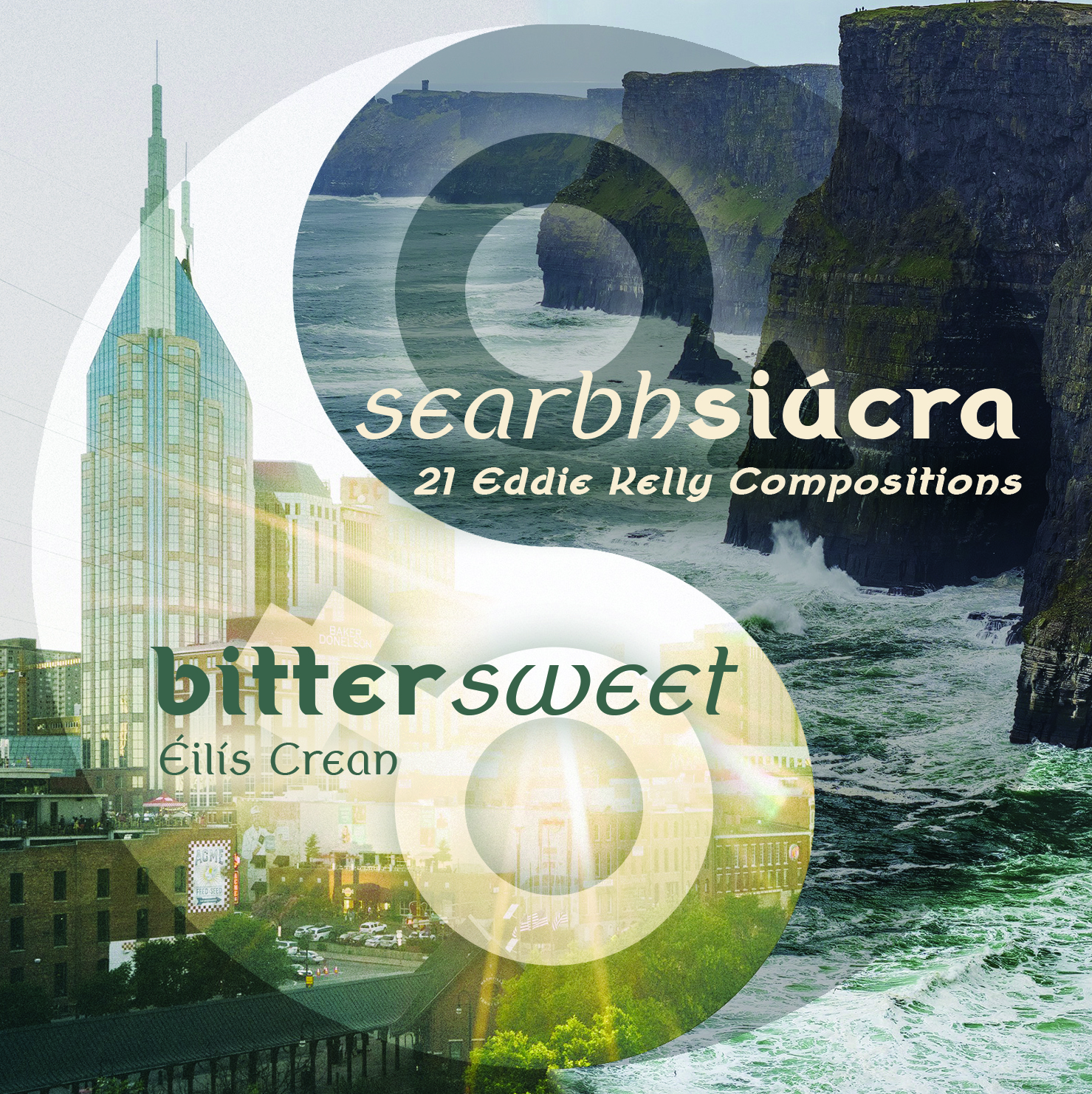
Searbh Siúcra (2017)
This album features all twenty-one of Eddie Kelly's compositions, tunes he posted me in a brown envelope in 2009, with no note, no explanation. Just the music itself. Just trust
When I finally played the album for Eddie, his eyes filled with tears. "I never thought that could be done with those tunes," he whispered.
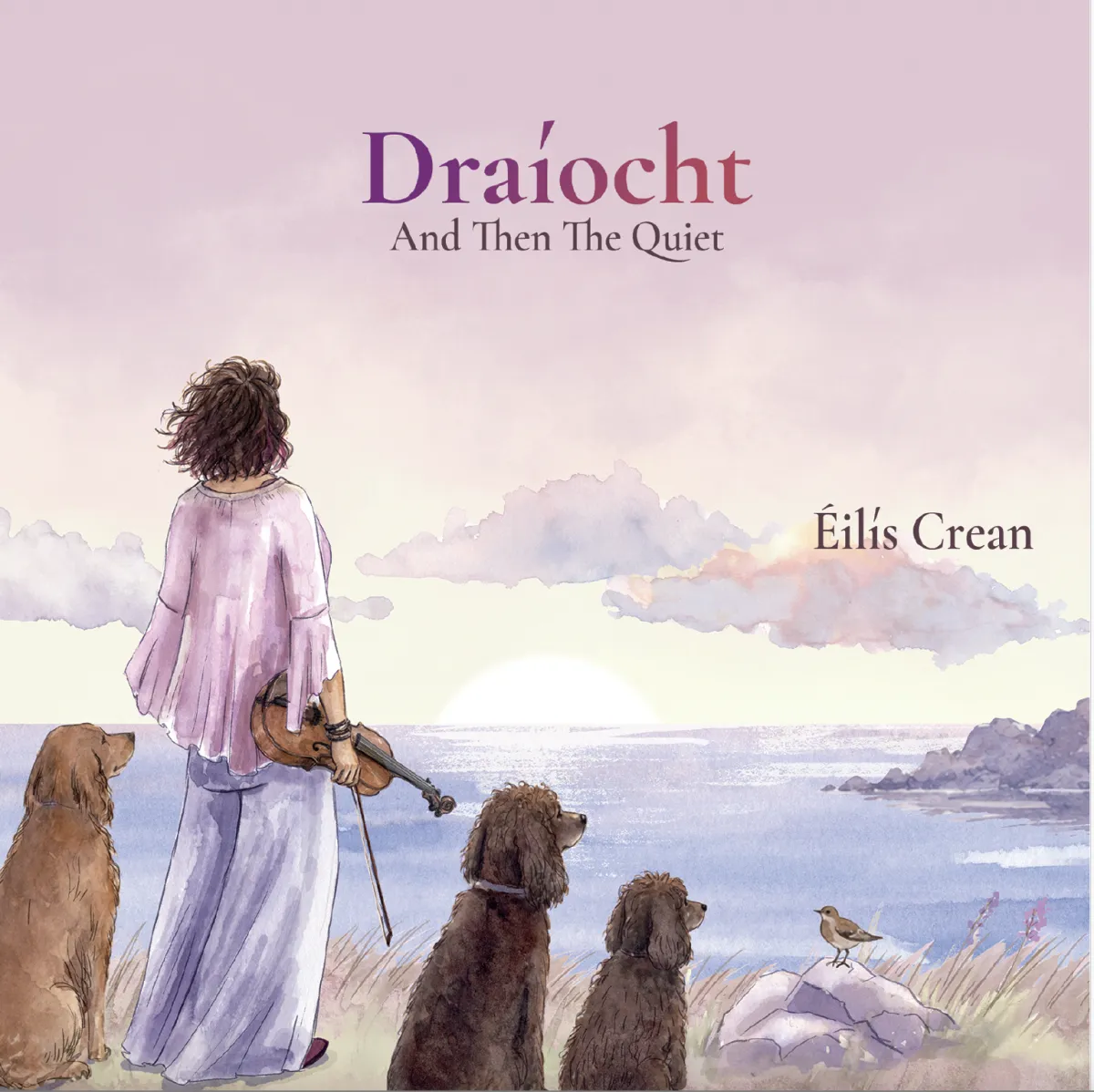
Draíocht: And Then The Quiet
The third album—mournful but hopeful. A deep exploration of Paddy Fahey's compositions as taught to me by Eddie Kelly, recorded with musicians who understood what it means to be present together, not just perform together.
When they asked what I wanted for arrangements, I said: "How do you feel when you hear the tunes? Whatever you feel, that's what I want." And instead of rushing to deliver, they sat with the tunes and played from the heart.
Coming Soon
Pre-Order
An Evening in the Quiet Room
Eddie Kelly once walked into a session where I was playing. His first words:
"I came to hear you play."
He had not lifted a bow in nearly twenty years. He came anyway.
A Draíocht evening weaves story and music together. Not a concert with commentary, but a continuous transmission. The way Eddie taught me the East Galway Irish Music Tradition, tune by tune, silence by silence.
Daddy used to say: "Listen to the other person, not yourself." When you sit in a room where everyone is doing that, you exhale in a way you didn't know you'd been holding your breath.
That was the rambling house. The door was always open — not metaphorically, but literally. You didn't need an invitation. You didn't need an excuse. You simply showed up.
An evening of music and spoken word.
Two hours in two halves, with an interval. Music and spoken word alternating in ten-minute turns.
The music is from the album Draíocht: And Then The Quiet.
The spoken word moves through five themes:
From Doing to Being: What the quiet room taught me about presence
The Honey Sound: What happens to people when the music slows down
Don’t Make It Smaller: What happens when someone is finally listened to
Transmission vs. Transaction: What traditional Irish music teaches us about real connection
Simplicity as Intentional Beauty: The art of leaving things out
This isn't entertainment. It's what happens when someone sits with you, unhurried, and asks: How are you? Really, how are you?
Any of the five themes can be booked as a shorter keynote for conferences and gatherings in mental health, education and the arts. Always with the fiddle.
Booking Enquiries
Available for concerts, keynotes and workshops across the USA and Europe. Send an email to [email protected].
The Long Way Round
I dreamed once of someone pulling up to my house, knocking on my door, saying: "Come on, pack a small weekend bag. I'm taking you away."
No one came.
But something better happened. I stopped waiting. I found my way to a sandy driveway and a farm where broken things come to heal. Rescue dogs who'd learned that trust is possible again. Horses who carry themselves with a certainty that comes not from proving anything, but from knowing exactly who they are.
Seven is a stallion. Those first quiet weeks, he made a ritual of me—walking the fence line beside my car each morning when I arrived, and again each evening as I slowly reversed out. Dark chestnut with a jet-black mane—the kind of coloring that holds light and shadow at once. Like the old Irish seasons. Like the music itself. Like grief and joy existing in the same breath.
I still cry. Deeply. The grief hasn't disappeared—that's not how grief works. Some losses leave a hollow that never quite fills. But you learn to carry it differently. You learn that the hollow can coexist with joy, with laughter, with small moments of unexpected grace.
The crooked deer never got straightened. Neither did I.
But now I know where to look. Not outward. Not at the next seminar or the next stage or the next accomplishment. Inward. Back to the woven stool. Back to the music that sounds like honey. Back to the simple truth that Daddy knew all along:
"You know, there's nothing wrong with those old simple tunes."
There's nothing wrong with a simple life. A quiet room. A presence that asks nothing and gives everything.
This is what I came home to. This is what was there all along.
And then the quiet.
About Éilís
I was born in Ireland and learned traditional music from master musician Eddie Kelly in his sitting room in Castlerea. What I didn't understand as a child was that Eddie wasn't just teaching music—he was transmitting a way of being.
After emigrating to England and then America, I spent many years as a Radiographer before transitioning into healthcare IT. I've implemented complex clinical systems across major healthcare organizations. I've run consulting practices and led technical teams.
But all those years, I was searching. Crossing continents and stages, looking for what I thought I'd lost.
It took decades of moving; countries, careers, stages, systems, before I finally sat still long enough to listen. The quiet room had held everything all along.
I've released two albums of traditional Irish music: The Lonesome Fiddler (2014) and Searbh Siúcra (2017), with a third album, Draíocht: And Then The Quiet, coming soon. I created eddiekellymusic.com as a living tribute to Eddie, and authored This Is Your Life: A Tribute to Eddie Kelly.
My memoir Draíocht: And Then The Quiet is the story of learning to be in a world addicted to doing.
I live in the USA, where I continue to transmit the East Galway Irish Music Tradition through music, writing, and the simple act of sitting with people, unhurried, and asking how they really are.
— Éilís Ní Chriocháin
Letters From The Quiet Room
I send occasional letters about:
• The journey from doing to being
• Stories from the tradition
• Music, memoir, and the quiet room
• What it means to be witnessed
You don't need another tool. You don't need another course.
You need what Eddie offered in that small sitting room beneath the crooked deer: someone paying attention.
Someone saying through their presence: You matter. I see you. You belong.
The Letters
Occasional letters about the journey from doing to being, stories from the tradition, and what it means to be witnessed.